"Newton Of Color"

Klee conducted substantial research on the subject of color theory. "Color has taken possession of me; no longer do I have to chase after it, for I know that it has held me permanently," he once said. I am one with color. I am an artist. Klee is now known as the Newton of Color.
Isaac Newton discovered that when it comes to color, the way that paint and light interact is different. Different color results from mixing red and yellow light than from mixing red and yellow paint. Paul Klee was greatly influenced by this revelation. Your brain adjusts by displaying a purple tint when you look away after seeing yellow when staring at a bright light. However, as was already noted, Klee claimed that when it comes to paints, purple and yellow are the most difficult colors to harmonize.
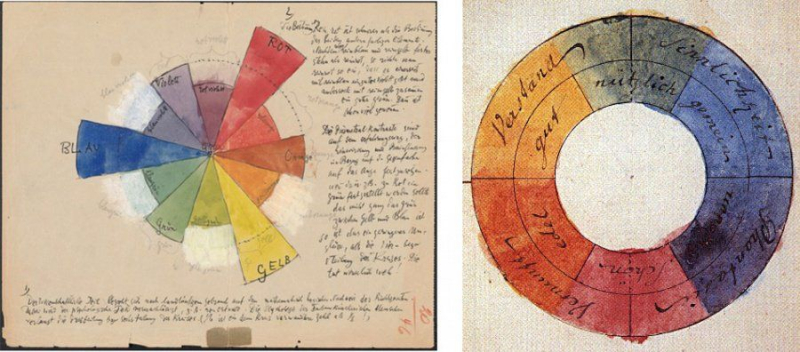
Paul Klee discussed the "tiresomeness" of having "too much white" in a painting in some of his published works. In order to aid painters in using color as successfully as possible, he created a theory of colors. In his writings, Klee discusses the value of utilizing complementary colors to balance one another and the "difficulty" of combining the strong, ferocious tones of yellow and violet. This is due to the fact that, according to Klee, the two most unlike colors in the entire color spectrum are yellow and violet. Klee created a color wheel that can be used as a cross-referencing tool to aid artists in discovering complementary colors. These ideas are presented in Klee's "Pedagogical Sketchbook" work.